




.jpg)
Featured Products

Weighing indicators
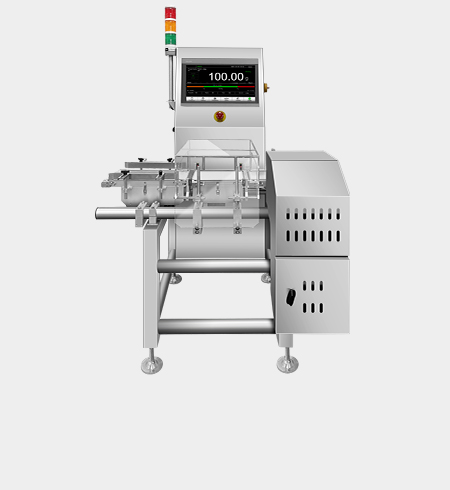
Checkweighers
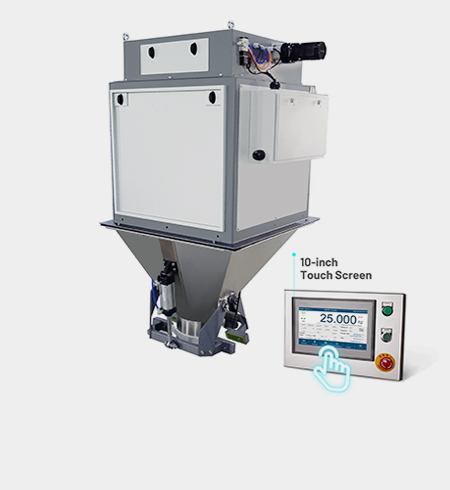
Bagging Scales
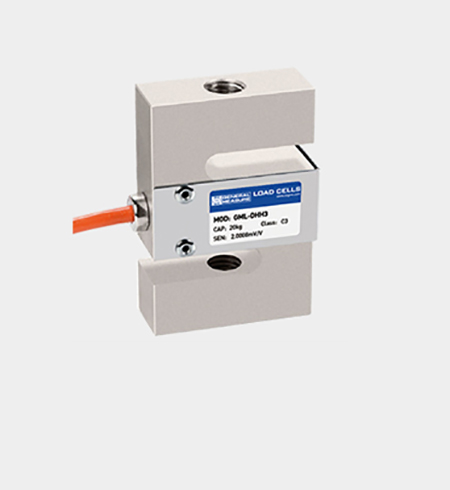
Load Cells
Machining is a commercial activity. Bhattacharya details how to calculate the optimum cutting speed for maximum production rate or minimum manufacturing cost. 3. Why Students and Engineers Search for the PDF
In the world of manufacturing engineering, few texts have achieved the legendary status of "Metal Cutting Theory and Practice" by . For over four decades, this book has served as the cornerstone for undergraduate and postgraduate students, as well as practicing tool engineers across India and globally. If you have searched for the term "Metal Cutting Theory And Practice By A.Bhattacharya Pdf" , you are likely an engineering student preparing for exams, a researcher revisiting the fundamentals of shear angle, or a professional seeking to optimize tool life.
The transformation of solid metal into a curled chip is the heart of metal cutting science. The book explores:
The subtitle of the book is "Theory and Practice," and it delivers on both. Let’s look at a practical scenario comparing the book’s advice to real-world CNC work.
It is a essential reference for those pursuing M.Tech or PhD programs in manufacturing science.
Ultimately, the "PDF" is just a file. The knowledge inside—how to break a chip, why a tool wears, and how to cut faster—is what turns a code into a component, and a student into an engineer.
Bhattacharya explains (MCD), which relates:
“I found the story,” Rohan said. “Bhattacharya doesn’t just give rules. He explains why the metal wants to cut, if you ask it correctly.”
Key differentiators of this book include:
The text classifies how tools fail, focusing on crater wear (on the rake face) and flank wear (on the relief face).
Bhattacharyya’s work is highly regarded for its to product-process linkage. It bridges the gap between pure academic theory and the practical troubleshooting required in industrial settings.
Caused by rapid, cyclic temperature fluctuations. Taylor's Tool Life Equation
| Feature | A. Bhattacharya | M.C. Shaw (Metal Cutting Principles) | Boothroyd & Knight | | :--- | :--- | :--- | :--- | | | Medium-High | Very High (Calculus heavy) | Medium | | Practical Examples | High (Industry focused) | Low (Research focused) | Medium-High | | Readability | Excellent (Self-study friendly) | Dry (Graduate level only) | Good | | Cost/Availability | Low (Affordable for students) | High | High |
The book details the American Standard Association (ASA) system for single-point tools:
The book is authored by Amitabha Bhattacharyya (also spelled Bhattacharya), who has historically been associated with the Central Mechanical Engineering Research Institute (CMERI) in India, a premier national research institute for mechanical engineering. This background lends immense practical and research-based credibility to the text, ensuring that its content is not just theoretical but also grounded in real-world engineering challenges and solutions.
is the friction angle). Bhattacharya discusses the limitations of this assumptions-heavy model and introduces more realistic revisions. VTn=Ccap V cap T to the n-th power equals cap C The book expands this to include feed ( ) and depth of cut (
Metal Cutting Theory and Practice by A. Bhattacharya: A Comprehensive Guide
Metal Cutting Theory and Practice by A. Bhattacharya remains a definitive text that elevates machining from a manual trade to a precise science. Its dense mathematical models and foundational physics continue to guide the engineers who design the cutting tools and manufacturing processes of tomorrow. Advance Your Manufacturing Knowledge
_Manual_Batching_Mode.jpg)
Machining is a commercial activity. Bhattacharya details how to calculate the optimum cutting speed for maximum production rate or minimum manufacturing cost. 3. Why Students and Engineers Search for the PDF
In the world of manufacturing engineering, few texts have achieved the legendary status of "Metal Cutting Theory and Practice" by . For over four decades, this book has served as the cornerstone for undergraduate and postgraduate students, as well as practicing tool engineers across India and globally. If you have searched for the term "Metal Cutting Theory And Practice By A.Bhattacharya Pdf" , you are likely an engineering student preparing for exams, a researcher revisiting the fundamentals of shear angle, or a professional seeking to optimize tool life.
The transformation of solid metal into a curled chip is the heart of metal cutting science. The book explores:
The subtitle of the book is "Theory and Practice," and it delivers on both. Let’s look at a practical scenario comparing the book’s advice to real-world CNC work.
It is a essential reference for those pursuing M.Tech or PhD programs in manufacturing science.
Ultimately, the "PDF" is just a file. The knowledge inside—how to break a chip, why a tool wears, and how to cut faster—is what turns a code into a component, and a student into an engineer.
Bhattacharya explains (MCD), which relates:
“I found the story,” Rohan said. “Bhattacharya doesn’t just give rules. He explains why the metal wants to cut, if you ask it correctly.”
Key differentiators of this book include:
The text classifies how tools fail, focusing on crater wear (on the rake face) and flank wear (on the relief face).
Bhattacharyya’s work is highly regarded for its to product-process linkage. It bridges the gap between pure academic theory and the practical troubleshooting required in industrial settings.
Caused by rapid, cyclic temperature fluctuations. Taylor's Tool Life Equation
| Feature | A. Bhattacharya | M.C. Shaw (Metal Cutting Principles) | Boothroyd & Knight | | :--- | :--- | :--- | :--- | | | Medium-High | Very High (Calculus heavy) | Medium | | Practical Examples | High (Industry focused) | Low (Research focused) | Medium-High | | Readability | Excellent (Self-study friendly) | Dry (Graduate level only) | Good | | Cost/Availability | Low (Affordable for students) | High | High |
The book details the American Standard Association (ASA) system for single-point tools:
The book is authored by Amitabha Bhattacharyya (also spelled Bhattacharya), who has historically been associated with the Central Mechanical Engineering Research Institute (CMERI) in India, a premier national research institute for mechanical engineering. This background lends immense practical and research-based credibility to the text, ensuring that its content is not just theoretical but also grounded in real-world engineering challenges and solutions.
is the friction angle). Bhattacharya discusses the limitations of this assumptions-heavy model and introduces more realistic revisions. VTn=Ccap V cap T to the n-th power equals cap C The book expands this to include feed ( ) and depth of cut (
Metal Cutting Theory and Practice by A. Bhattacharya: A Comprehensive Guide
Metal Cutting Theory and Practice by A. Bhattacharya remains a definitive text that elevates machining from a manual trade to a precise science. Its dense mathematical models and foundational physics continue to guide the engineers who design the cutting tools and manufacturing processes of tomorrow. Advance Your Manufacturing Knowledge