Disclaimer
Nextpad++ is an independent community port and is not affiliated with or endorsed by the Notepad++ project.
Killing Stalking Chapter 1 Top
Nextpad++ is macOS native editor for Apple Silicon and Intel Macs.
Nextpad++ is an independent community port and is not affiliated with or endorsed by the Notepad++ project.
Nextpad++ is macOS native editor for Apple Silicon and Intel Macs.
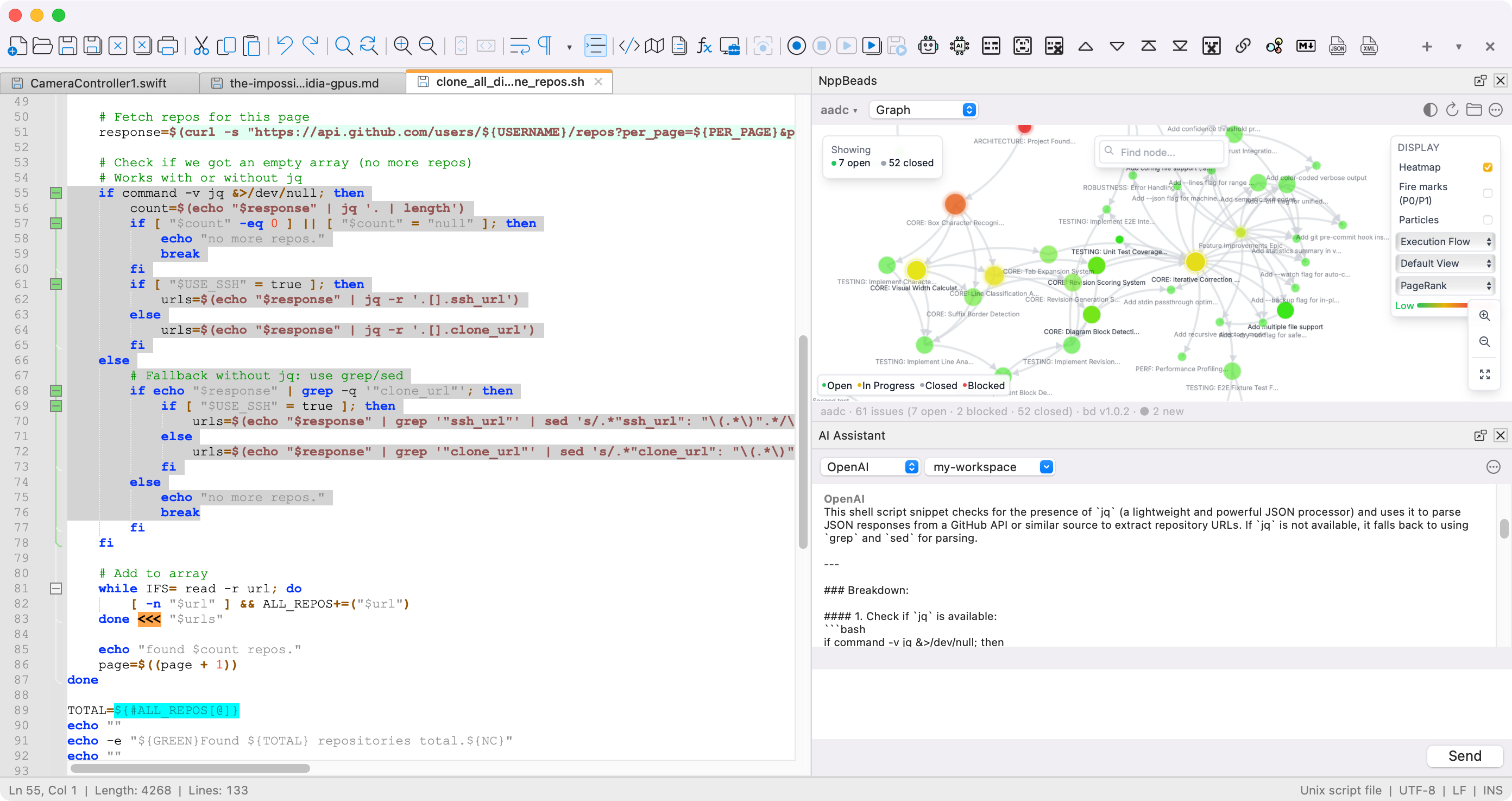
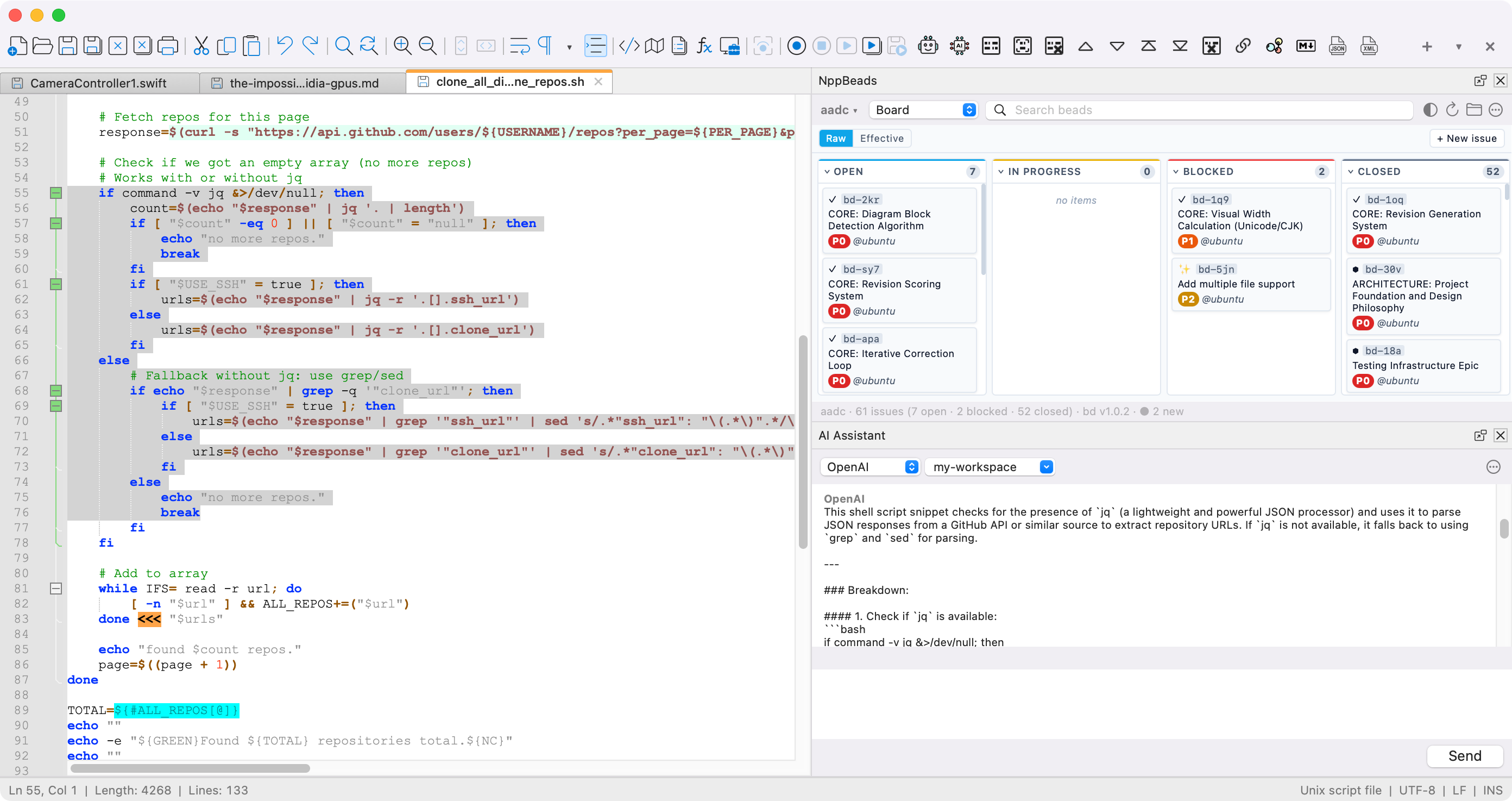
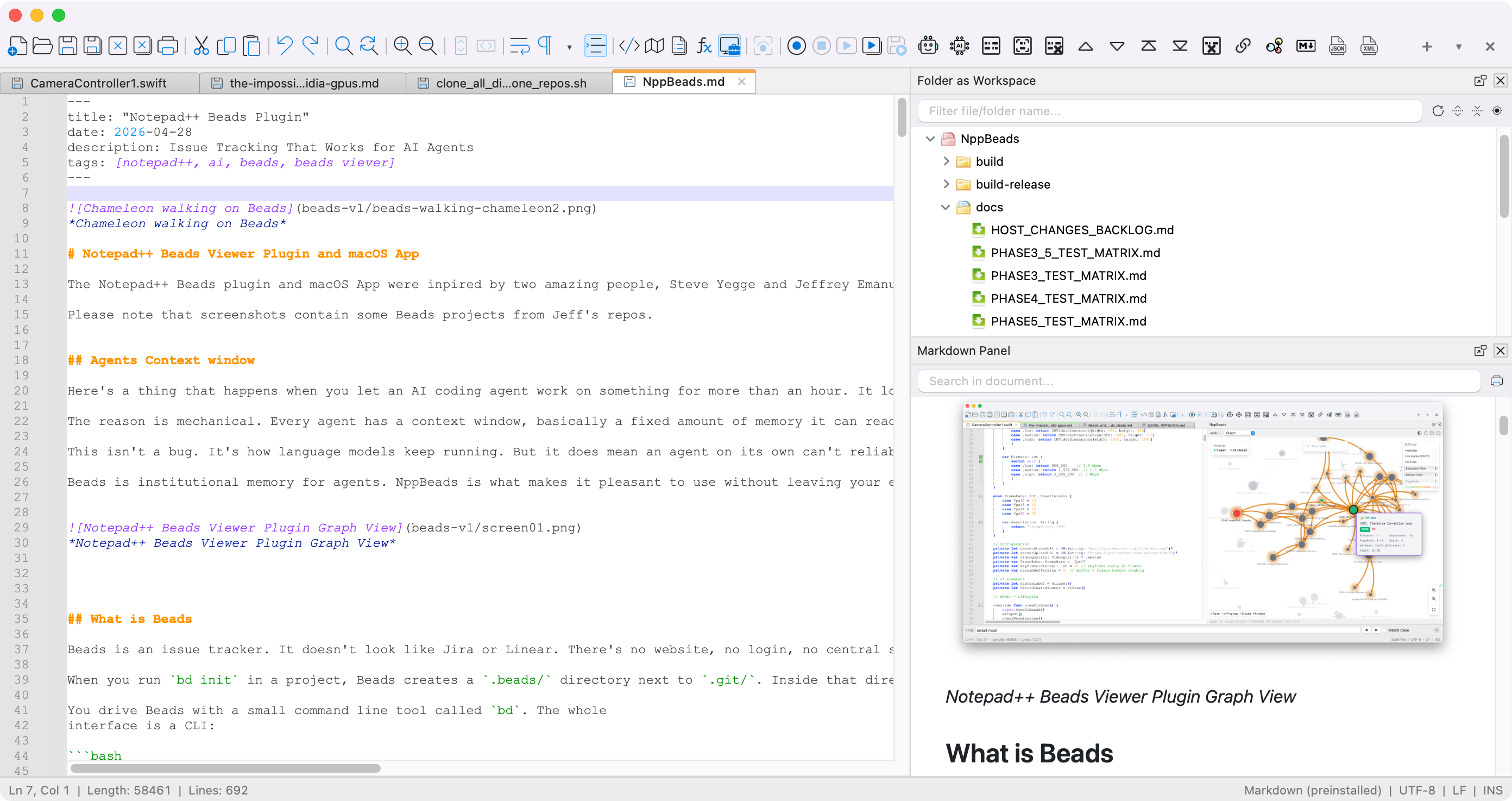
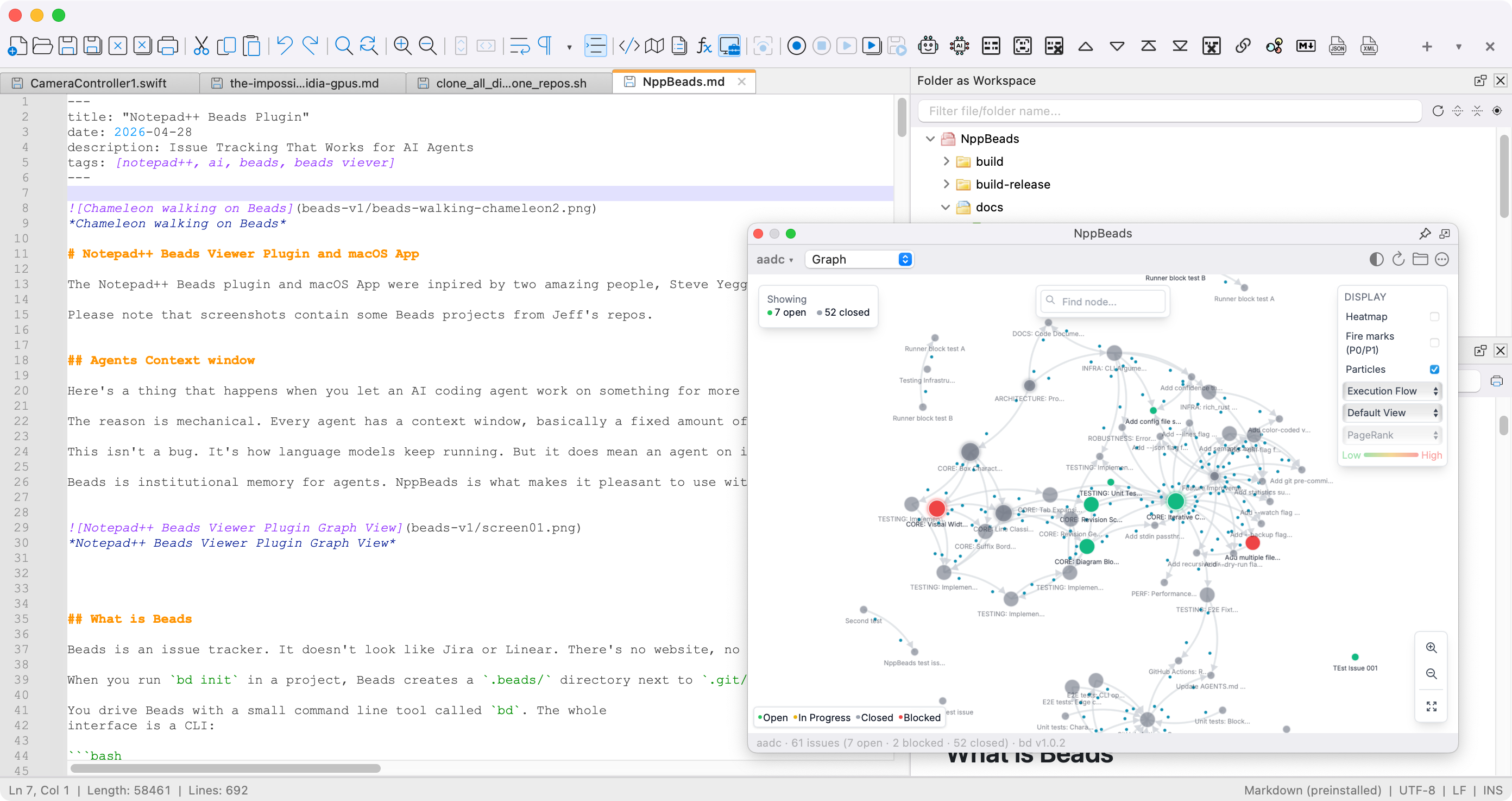
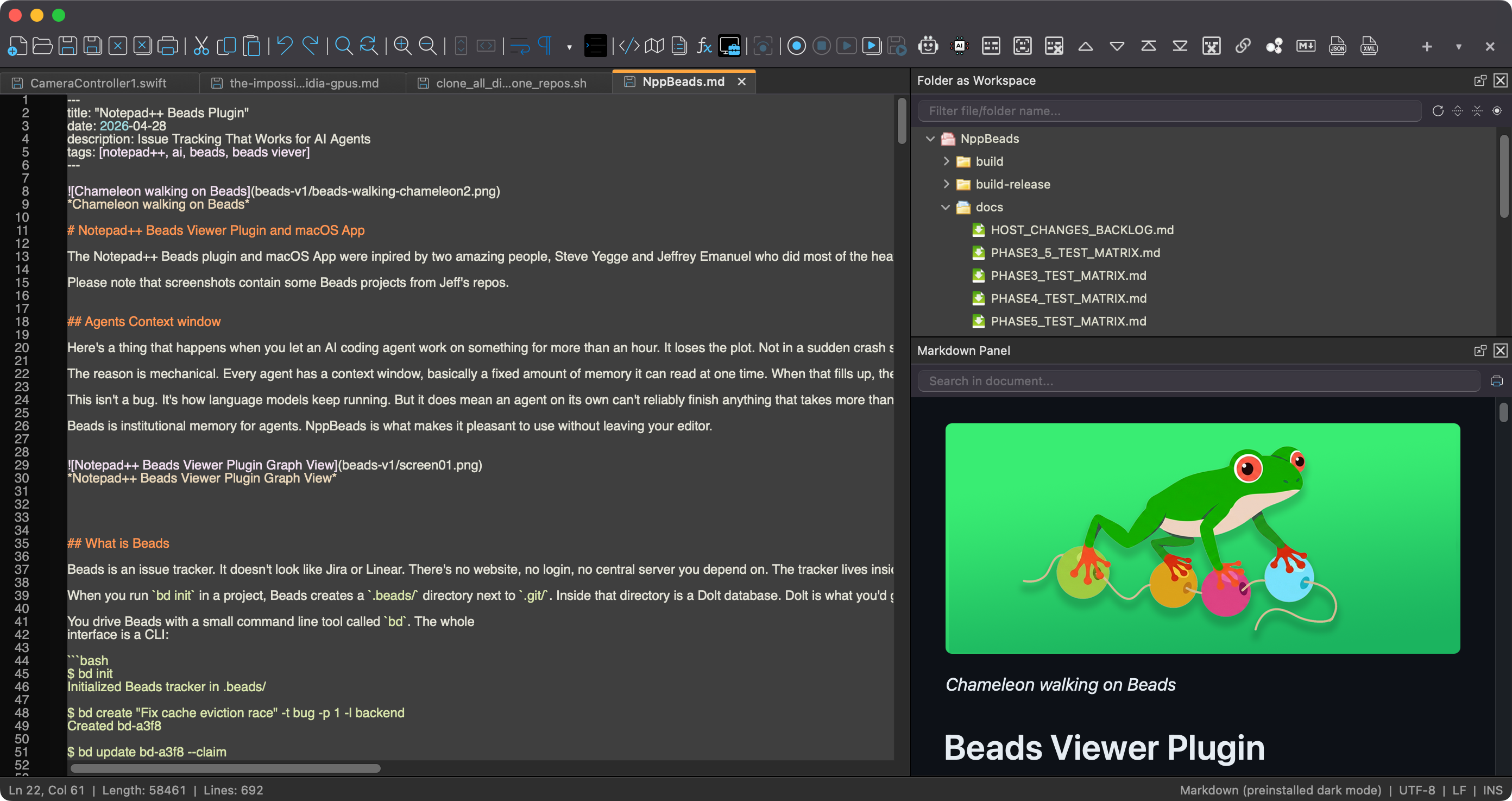
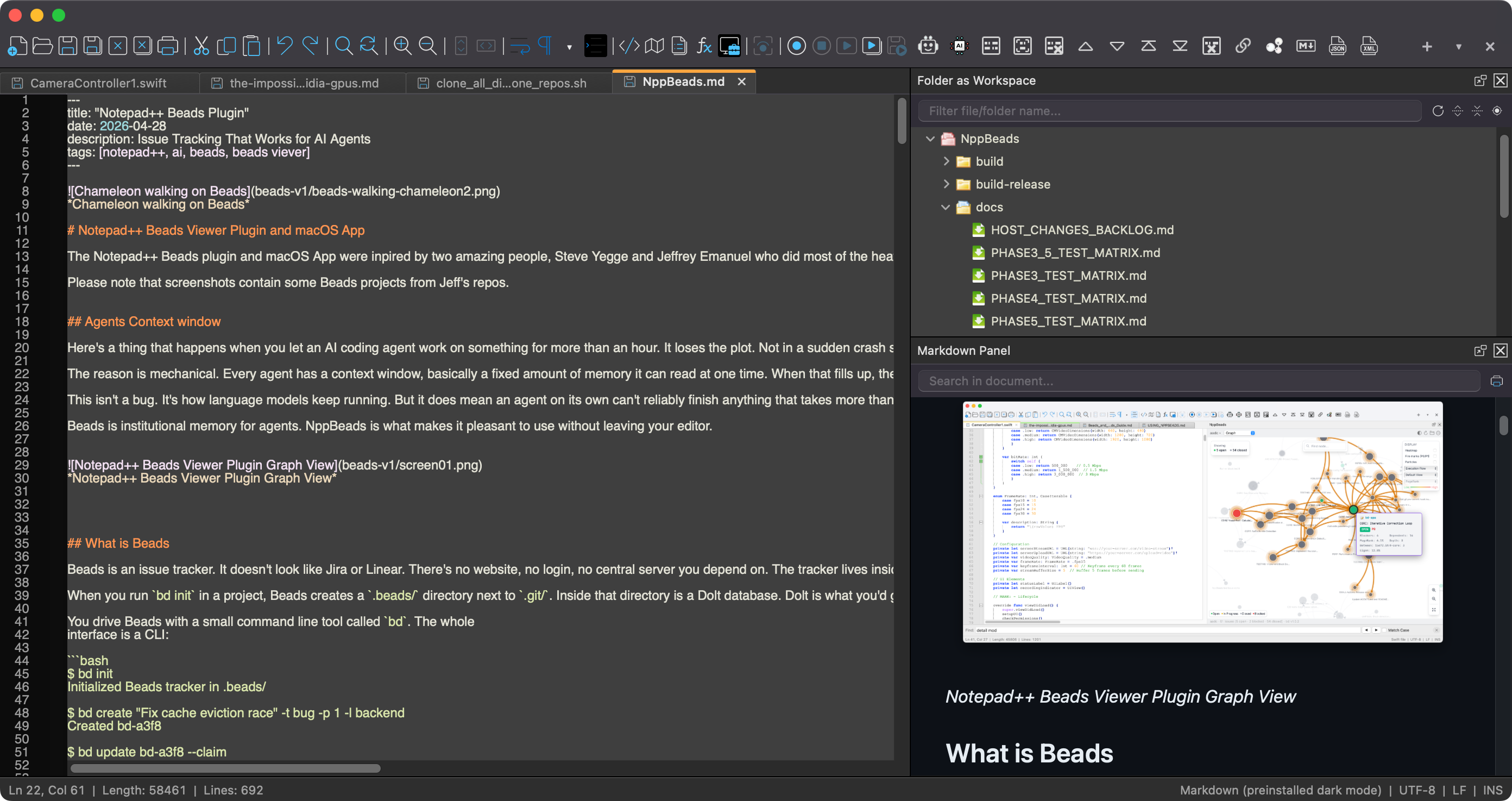
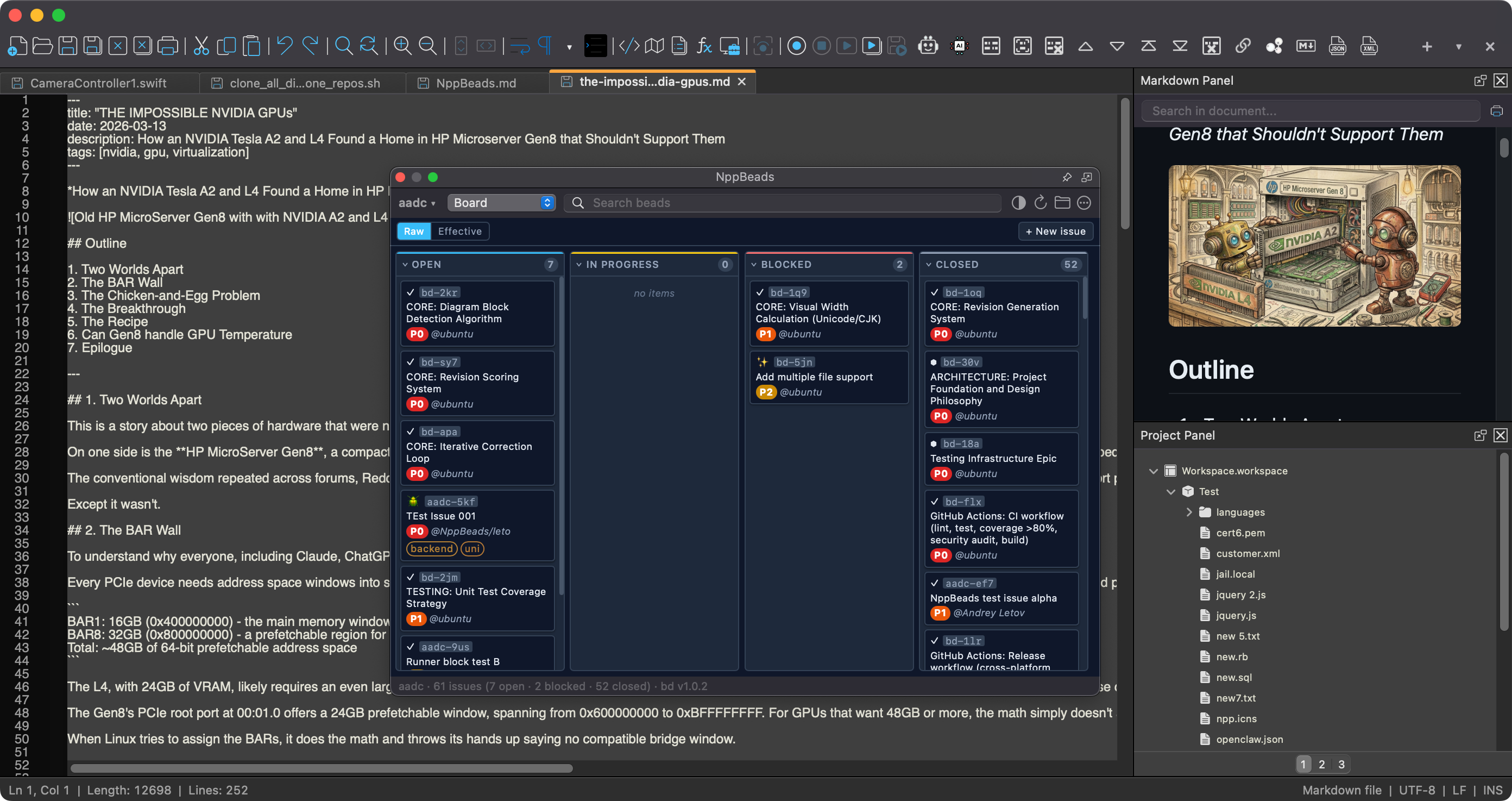
Nextpad++ has powerful features and built to feel right at home on macOS.
Support for 80+ programming languages with customizable color themes and user-defined languages. Switch Nextpad++ to the language you speak. It supports 137 languages out of the box.
Extend functionality with a rich plugin ecosystem. Customize your editor to match your workflow. More plugins are being migrated to macOS as we speak.
Built for M-series chips. Launches instantly, runs efficiently, and respects your battery life.
Powerful search with regular expressions, find in files, bookmark lines, and incremental search.
View and edit two documents side by side, or two parts of the same document simultaneously.
Record, save, and replay macros to automate repetitive editing tasks with ease.
Nextpad++ is a free, open-source source code editor that supports many programming languages and is great for general text editing. No Wine, Porting Kit, or emulation layer is needed — this is an independent native Notepad++ port governed by the GNU General Public License.
Based on the powerful editing component Scintilla, Nextpad++ for Mac is written in Objective C++ and uses pure platform-native APIs to ensure higher execution speed and a smaller program footprint. I hope you enjoy Nextpad++ on macOS as much as I enjoy bringing it to the Mac.
This project is an open-source and independent community port of Notepad++ to macOS, started on March 1, 2026. It is distributed as an Apple Developer ID-signed and Apple-notarized Universal Binary, runs natively on both Apple Silicon (M1–M5) and Intel Macs, and contains no telemetry, no advertising, and no data collection of any kind. The full source is available at github.com/nextpad-plus-plus/nextpad-plus-plus-macos. For the official Windows version of Notepad++, visit notepad-plus-plus.org.
He successfully enters the house after a tense moment with a police officer, claiming to be a relative. Inside, he breathes in Sangwoo’s scent, buries his face in his pillow, and builds up the courage to explore further. . Before Bum can process what he’s seeing, Sangwoo returns home and strikes him brutally with a baseball bat. The chapter ends on a cliffhanger that defines the entire series: Sangwoo doesn’t kill him. Instead, he breaks Bum’s legs and keeps him as a prisoner, whispering, “Welcome to my home”.
Sangwoo opens the closet. For three silent panels, they stare at each other. Yoon Bum stammers an apology. Sangwoo smiles. This is the most terrifying moment in the chapter because Sangwoo’s reaction is too warm. He does not scream. He does not run. He invites Yoon Bum to stay for dinner.
From the very first pages, Chapter 1 masterfully subverts expectations, dragging readers out of a typical romance setup and plunging them headfirst into a waking nightmare. The Premise: Unrequited Obsession Turn Sour
The climax of Chapter 1 involves the discovery of the basement. In horror literature, the basement represents the subconscious or the repressed id of the home. When Bum is dragged into the basement, he is literally dragged into Sangwoo’s killing stalking chapter 1 top
Chapter 1 introduces us to , a fragile, isolated young man whose infatuation with his former military peer, Oh Sangwoo , has spiraled into a dangerous obsession.
Many readers were instantly captivated by the story's unflinching brutality and the sheer artistry of its suspense. "It's effective in creating a dramatic atmosphere," one blogger noted, referring to the story's use of a full-page panel of pure black silence after the initial attack. The art style, which is both beautiful and starkly grotesque when needed, was praised for its ability to enhance the feeling of entrapment and dread.
Chapter 1 wastes no time introducing us to the fragmented psyche of the protagonist, Yoon Bum. Bum is immediately coded as an outcast—scrawny, socially isolated, and visibly bearing the weight of severe trauma. Through his internal monologue, we learn of his intense, consuming fixation on Oh Sangwoo, a charismatic, handsome classmate from his university and military service days. He successfully enters the house after a tense
In this comprehensive breakdown, we will dissect from the top down, analyzing the narrative structure, character introductions, and the brutal dismantling of typical Boys’ Love (BL) conventions.
Meanwhile, we see glimpses of Sang-woo's life, showcasing his seemingly perfect relationships with his friends and acquaintances. However, as the chapter progresses, subtle hints suggest that Sang-woo may not be as innocent as he appears.
From its very title, Killing Stalking establishes a premise built on transgression. Chapter 1 immediately dismantles the expectations of casual readers by leaning into the dark reality of its protagonist’s obsession. Before Bum can process what he’s seeing, Sangwoo
Upon release, the chapter sparked intense debate. Some readers were drawn to the high-stakes suspense, while others were shocked by the graphic nature of the content. Regardless of the controversy, it solidified its place at the top of the "must-read" lists for fans of dark thrillers. It isn't just a story about a stalker; it’s a story about the terrifying realization that you might have broken into a place much worse than where you started. Final Thoughts
This moment completely upends the narrative. In an instant, the story shifts from a slice-of-life thriller about a stalker to a high-stakes horror where the stalker has walked directly into the den of an apex predator. The Ultimate Subversion: The Final Panel
how i can read this a manga ? — Killing... Q&A - Goodreads